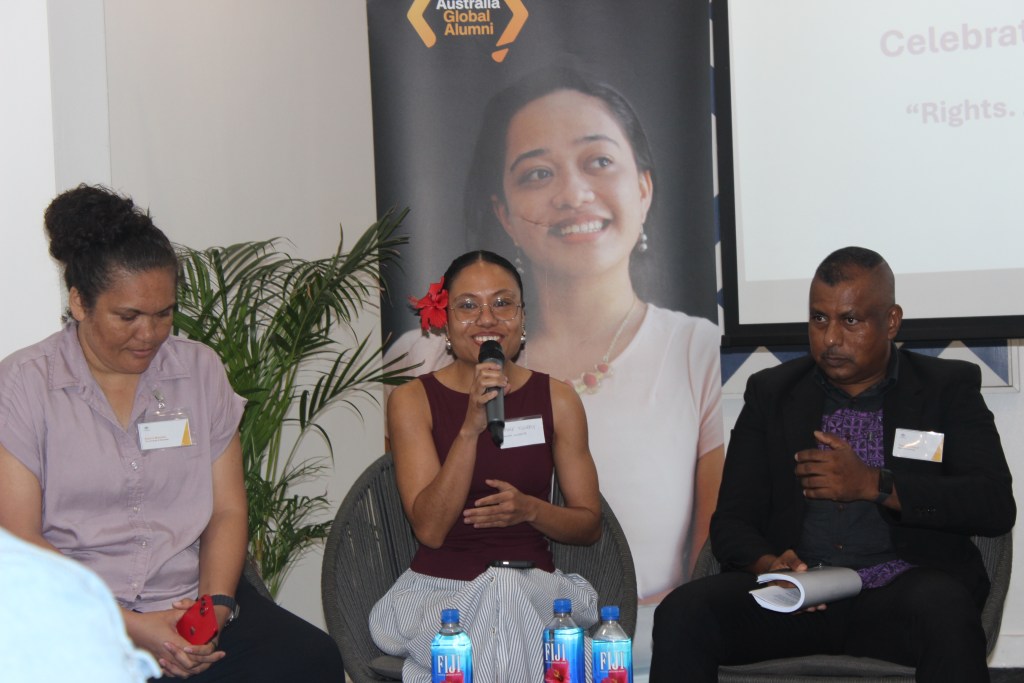
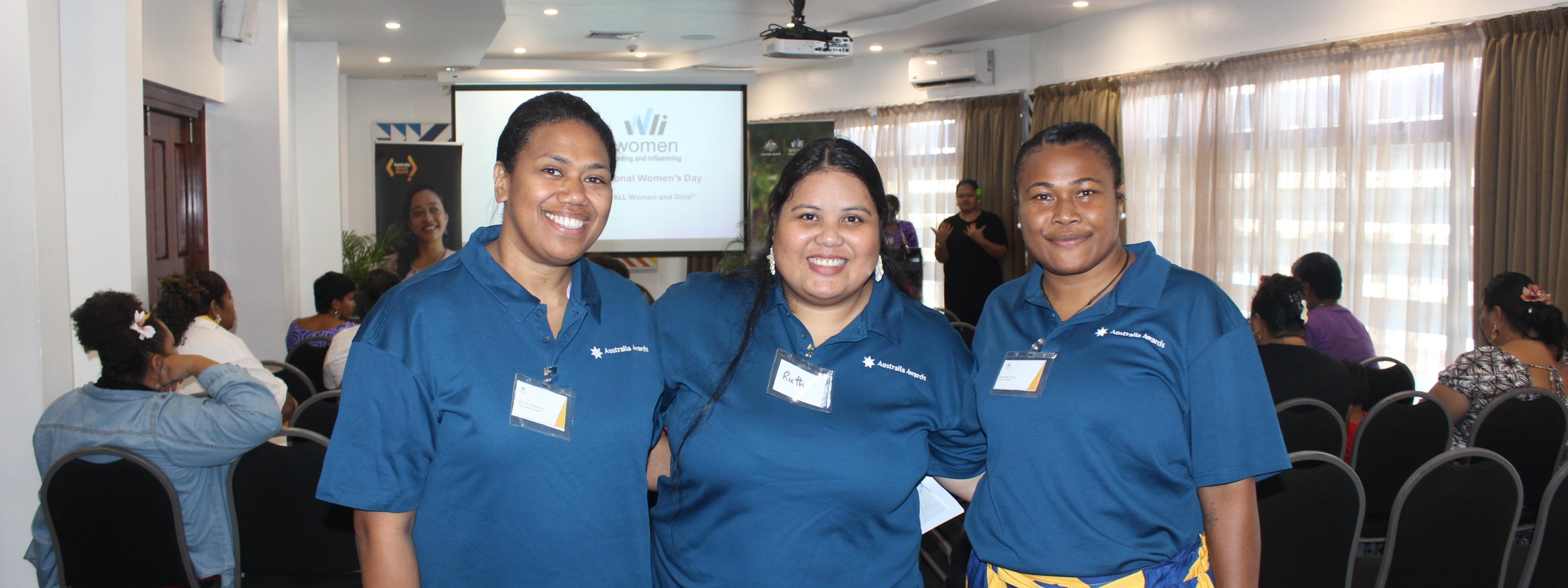
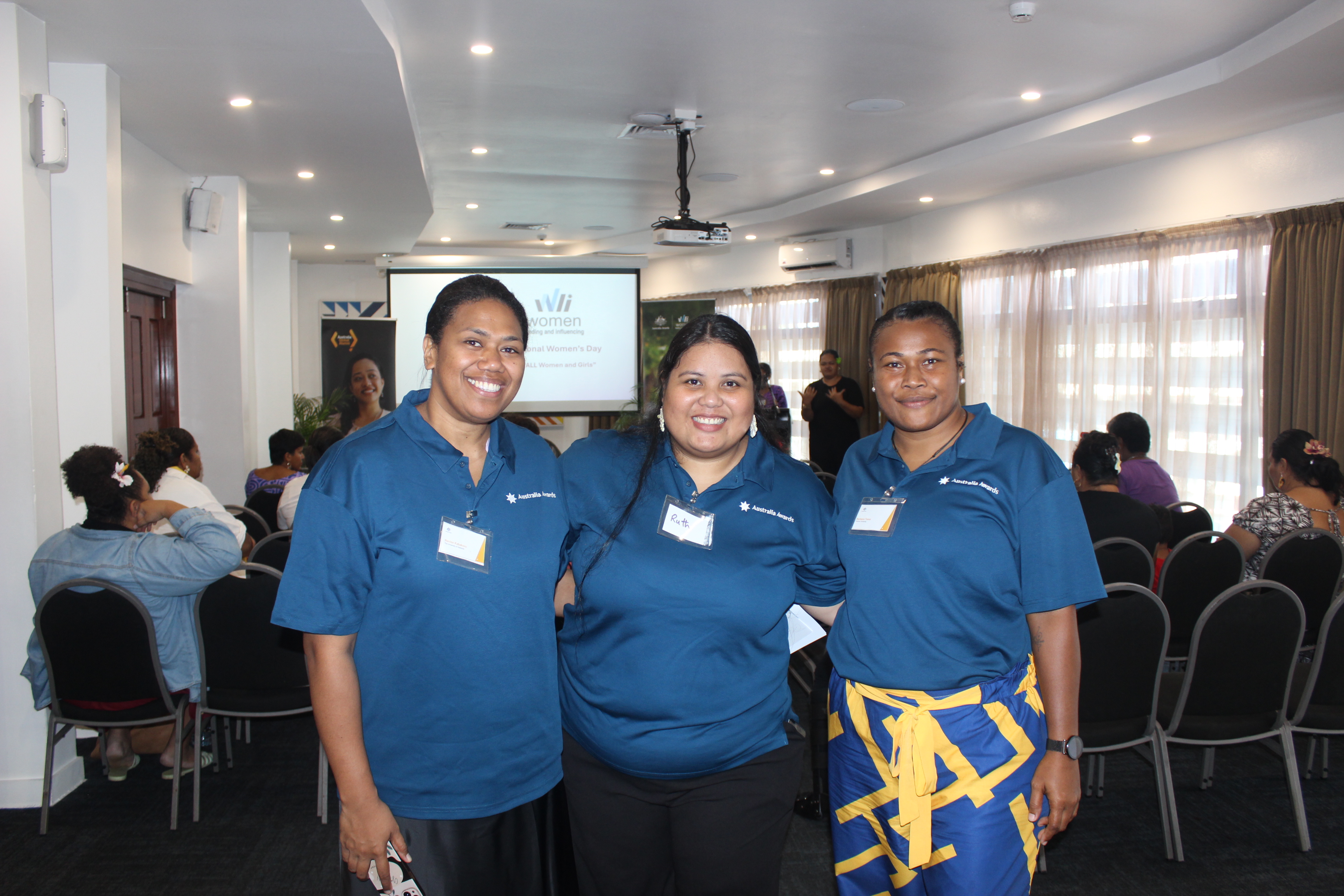
Earlier this year in Suva, Australia Awards Fiji and Women Leading and Influencing (WLI) alumni gathered to mark International Women’s Day.
Under the theme “Rights. Justice. Action. For ALL Women and Girls,” the event brought together leaders from across Fiji — from government, engineering, policing, architecture, and civil society — to share experiences and reflect on progress.
Across the conversations, one message was clear: Progress is visible, but more work is needed to ensure women’s voices are fully heard, valued, and supported.
Where Leadership Takes Shape
For environmental engineer Grace Tudreu, leadership started at home.
As the eldest in her family, she naturally took on responsibilities — caring for younger siblings, setting an example, and learning what it meant to support others. These early experiences shaped her understanding of leadership and continue to guide her today.
Now working in a male-dominated field, Grace carries those same values into her work. She reflects on the women she grew up around — strong, steady, and often leading without recognition.
“We are nurturers… we try our best to be good examples.”
Her journey hasn’t been without challenges. Entering professional spaces where leadership is often defined by confidence and authority, she has had to navigate expectations of what a leader should look and sound like.
But her perspective remains grounded:
“Leadership doesn’t need to be loud… there is power behind the scenes.”
Today, Grace is focused on creating space for others — particularly young women — to step forward, grow, and lead.
Redefining What Leadership Looks Like
For architect Kelera Mataika, leadership has meant persistence in spaces where women are rarely represented.
As the only Indigenous woman architect in Fiji, she has faced moments of uncertainty and isolation, often having to find her own way forward.
“I had to figure it out on my own.”
Her experience reflects a broader reality — many women are balancing cultural expectations, career ambitions, and societal perceptions of success.
Despite these challenges, Kelera has remained committed to opening doors for others. Through mentoring and training, she encourages young women to explore technical fields and pursue careers that may once have seemed out of reach.
Her message is clear:
“Build your career, stand on your own, and then choose your path.”
For Kelera, leadership is not just about personal success — it is about making the journey easier for those who follow.
Opportunity and the Responsibility to Give Back
For many alumni, the Australia Awards scholarship was a turning point.
For Grace, it was more than an academic opportunity — it changed how she saw herself and what she believed was possible.
“Someone believed in me… and that changed how I saw myself.”
That belief became a source of motivation. Since returning to Fiji, she has made a conscious effort to support others — mentoring, recommending opportunities, and encouraging peers to take the next step.
“Leadership should create more leaders, not followers.”
Across the alumni network, this sense of responsibility continues to grow, with many giving back in practical, meaningful ways.
What Allyship Looks Like in Practice
The discussion also highlighted the important role men play in creating more inclusive spaces.
Rakesh Chand, Director of Community-Oriented Policing, shared a moment from his own leadership journey.
While selecting a second-in-command, he was presented with two male candidates. Instead of proceeding, he paused and asked for a broader review of potential candidates.
That decision led to the recognition of a highly capable female officer.
For Rakesh, allyship is demonstrated through everyday decisions, who is given opportunities, whose contributions are recognised, and how leadership spaces are shaped.
“True allies work alongside women to create equitable environments.”
His experience reflects a broader shift, one where leadership includes actively supporting and advocating for others.
Navigating Expectations and Finding Your Voice
For Lavenia Rokovucago, leadership has meant navigating expectations that are not always visible but deeply felt.
She describes situations where responsibility is given, but the authority or space to fully lead is limited.
“You’re given responsibility but not always the space to lead.”
These experiences can be challenging, but they have also been opportunities for growth. Over time, she has learned to reflect, adapt, and strengthen her confidence.
“Every difficult situation is an opportunity to grow.”
Her journey highlights that resilience is often built through real, everyday experiences.
Strengthening Leadership Across Fiji
The event reinforced the importance of collaboration — across professions, sectors, and communities — to sustain progress and create meaningful change.
Advancing opportunities for women and girls requires ongoing effort — through leadership, partnership, and everyday actions. It means speaking up, challenging norms, and creating space for others.
With more than 1,700 Australia Awards alumni across Fiji, the network is making significant impact as alumni continue to lead, mentor, and support future generations.