
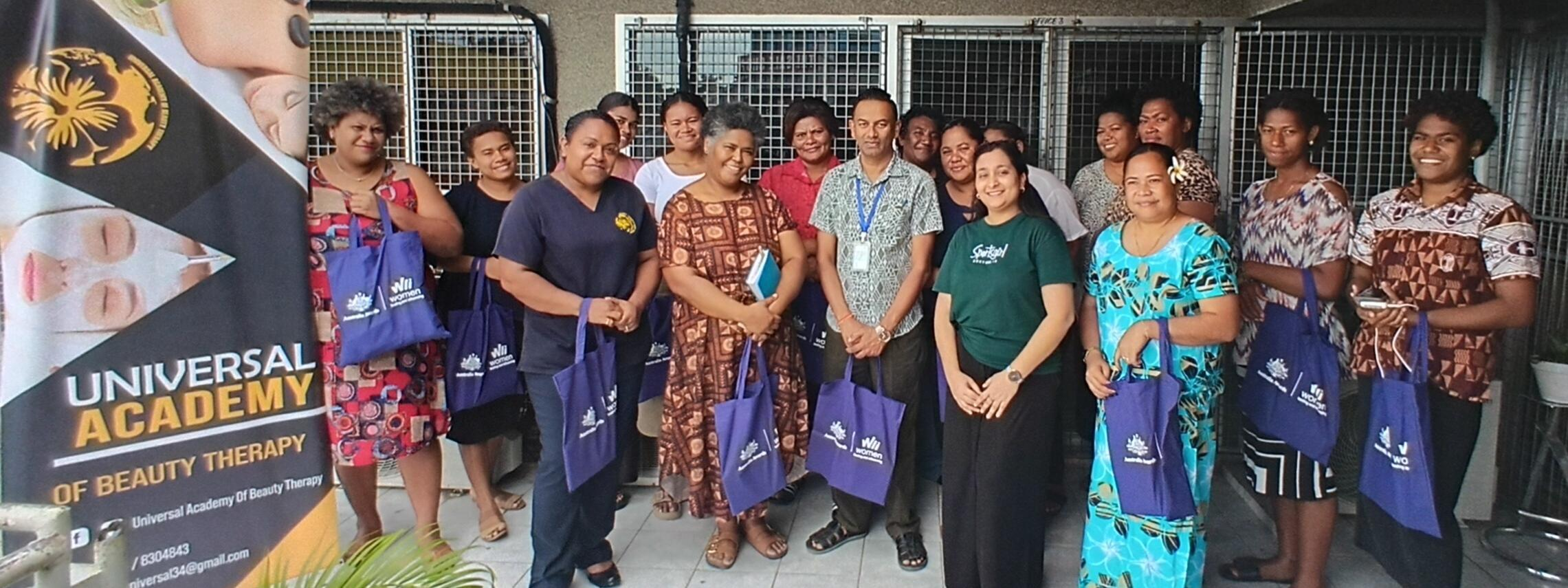

For WLI alumna Priya Singh, the main objective underpinning the decision to deliver a five-day beauty therapy program for women in Nadi, Fiji was simple: to create an opportunity for women to gain practical vocational skills while also building confidence and sustainable pathways to generating income and professional opportunities.
Working alongside Universal Academy of Beauty Therapy – and with support from WLI’s Leadership Fund – Priya successfully delivered a pilot program that combined hands-on beauty therapy training with personal development and livelihood preparation.
Over five days, 15 women took part in practical training, daily reflection sessions, assessments, graduation activities and certificate presentations.
“Throughout the week, those taking part learned massage, manicure and pedicure techniques while also exploring topics such as self-care, confidence building, personal leadership, mental health, wellbeing and resilience. The interactive sessions encouraged women to reflect on their strengths, share their experiences and think about how they could apply their learning in both their personal and professional lives,” explains Priya.
“I wanted the participants to leave not only with technical skills, but also with greater confidence in themselves and a clearer understanding of the opportunities available to them.”
Lessons in leadership
Priya shared how, for her, the experience highlighted the value of collaborative leadership, stakeholder engagement and maintaining flexibility when plans need to change.
“There were challenges along the way, including participant referral changes, first-day absences and the unavailability of some planned contributors. However, these experiences strengthened my understanding of adaptive leadership and project management.”
“One of the biggest lessons I learned was the importance of remaining flexible while keeping sight of the program’s purpose and intended outcomes.”
Developing and delivering the program also reminded Priya of the importance of creating inclusive and empathetic learning environments.
“Many participants were balancing financial pressures, caregiving responsibilities, health challenges and limited access to training opportunities. So, designing the program around their realities helped ensure it remained accessible and meaningful,” says Priya.
“The experience has strengthened my commitment to delivering programs that empower women with the skills, confidence and resources they need to create sustainable change in their lives and communities.”
Creating lasting change
Reflecting on the training once it was finished, Priya says she feels it effectively delivered an integrated approach that combined vocational training with personal development and livelihood support. Participant feedback was highly positive and offered important insights for future possible activities.
“Many women expressed a desire for additional learning opportunities, including longer practical training sessions and further instruction in areas such as facial treatments and makeup. One participant also suggested that similar workshops should be made available to women in other communities and villages,” shares Priya.
“The women’s feedback reminded me that learning does not stop when a program ends. People want opportunities to keep growing, and to further develop their skills.”
For Priya, one of the most rewarding aspects of the training was seeing the women begin to connect their new skills with future possibilities.
“We wanted women to see that a practical skill can become a pathway to greater independence and economic opportunity. The participants left with practical skills, recognised certification and knowledge that could support employment, self-employment and small business development.”
Making an impact
To help participants continue their journey after the program ended, the project team provided each participant with a bottle of massage oil. This simple resource gave the women the opportunity to practise their skills, begin offering services to clients and take their first steps towards earning an income.
According to Priya, the impact of the training became clear almost immediately. Within a week of completing the program, one participant secured employment, providing an encouraging early example of the difference these types of opportunities can make.
“Sustainability is not just about completing a project. It is about ensuring people have the support, resources and confidence to continue moving forward long after the training has finished.”
Furthermore, Universal Academy of Beauty Therapy has continued providing post-training support, while a participant communication group has been established to encourage peer connection, share opportunities and provide ongoing encouragement. The Ministry of Women, Children and Social Protection has also expressed interest in supporting similar initiatives in the future.
“The program showed what is possible when practical skills, personal growth and community support come together, and I look forward to continuing this work and supporting even more women to realise their potential” says Priya.
“I am encouraged by the confidence, enthusiasm and determination demonstrated by the participants. The early employment outcome is promising, but the true impact will continue to unfold as women apply their skills, pursue new opportunities and build brighter futures for themselves and their families.”